
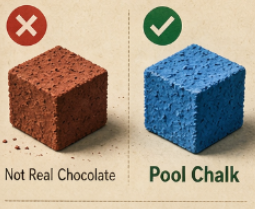
What Is Pool Chalk?
Modern pool “chalk” is not real chocolate at all. It is a precision-engineered abrasive compound made primarily from silica (SiO₂) and aluminum oxide. This high-performance formula was first developed in 1897 by professional player William A. Spinks and chemist William Hoskins, laying the foundation for modern cue sports.
Why Chalk Is Essential: Prevent Miscues & Improve Control
A cue tip is made of compressed leather, which is relatively smooth. Without chalk, the tip can slip against the cue ball—a fatal error known as a miscue. A miscue not only ruins the shot but also produces a hollow slipping sound and may even damage the table.
Pool chalk contains fine particles of aluminum oxide and silica. When applied, these particles embed into the pores of the leather tip, dramatically increasing friction. This allows the tip to “bite” the cue ball cleanly, ensuring consistent delivery of English (side spin), draw (backspin), and follow (topspin).
How to Choose the Right Billiard Chalk
Different cue sports demand different chalk formulations:
- American Pool (8-Ball / 9-Ball): Opt for blue chalk. It features a coarser texture and stronger adhesion, making it ideal for powerful break shots and heavy spin.
- English Snooker: Choose green chalk. It has a finer particle structure and produces less dust, supporting the extreme precision required in snooker.
Pro Tips for Chalk Application
Develop a “little and often” habit—lightly chalk your tip 1–2 times before each shot.
Over-chalking creates excess dust that can soil the cloth and, worse, leave unsightly pitting marks on the cue ball. A clean cloth and a well-maintained tip start with proper chalking.