
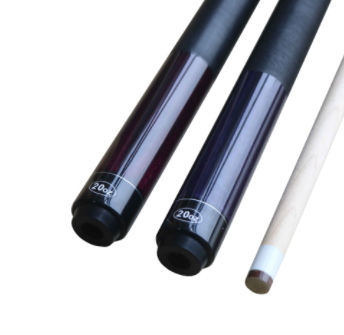
- Stiffness (Hardness)Stiffness is the most fundamental attribute of a cue. It ensures shot stability and minimizes deflection. When striking the ball with firm follow-through, observe whether the shaft vibrates or feels “twitchy.” Let your hands tell you the stiffness level. If the cue is too stiff, the hit will feel dead—almost like striking with an iron bar—lacking that subtle liveliness and responsiveness.
- Flexibility (Whip)Flexibility is a comprehensive indicator, especially in the shaft. It plays a key role in maintaining control on straight shots. An overly stiff cue makes precise cue ball control harder; a certain degree of flex helps by slightly extending the contact time between the cue tip and the cue ball. In other words, an excessively rigid shaft tends to make the cue ball “jump off” at impact, whereas a touch of flexibility provides a cushioning effect, allowing the tip to “bite” into the ball.
- Elasticity (Spring / Response)Elasticity reflects how effectively the cue transfers spin to the cue ball and is best judged by observing the ball’s rotation rate. Try gentle follow shots, draw shots, and side-spin shots—each reveals how much the cue “snaps back” energy into the ball. Generally speaking, the more elastic the cue, the less effort you need to generate the same amount of spin, making heavy spin shots feel easier and more relaxed.
- Power Transfer (Feedback & Joint Quality)Clean, efficient power transfer enhances overall hitting feel and also serves as a good test of joint craftsmanship. A quality cue delivers feedback that is crisp, solid, and lively—never muffled or “wooden”—with a clear separation of the cue ball from the object ball, and without uncomfortable vibration in your grip hand.
A great cue isn’t defined by these factors alone—they’re reference points at best. Ultimately, the best cue is the one that fits your personal stroke and habits. Intermediate players can start by testing house cues: try the same angle and the same spin with different cues to feel the differences. More advanced players might set up a few challenging shots or spin techniques and compare how each cue responds. Through comparison, you’ll naturally develop your own sense of what makes a cue right for you.Obright,custom cue weight and wrap OEM service,Have questions about cues? We’d love to discuss them with you.
Download Our Cue Specification Sheet → Request OEM Quote!