
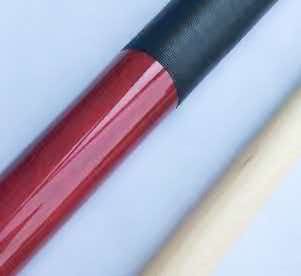
Today, stained wooden pool cues are more popular than ever. Staining not only reveals the wood’s natural grain but also helps players identify genuine materials at a glance. Combined with water decals, UV printing, and other techniques, stained cues offer endless visual variety and character.
At Obright Factory, cue staining may sound as simple as “coloring a finished butt,” but in practice, it comes with plenty of challenges. Through continuous testing and process refinement, we’ve developed a reliable staining method for maple cues. Below are our key takeaways—shared with cue enthusiasts and industry peers alike.
Ⅰ、Start with Flawless Maple
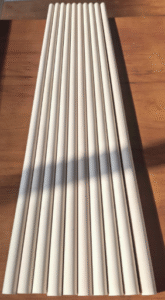
Staining acts like a magnifying glass—whatever is on the wood will show up more clearly after coloring. That’s why we insist on using Grade-A North American maple, with clean grain, no stains, and no mineral streaks. The goal of staining is to make the natural grain sharper and more dimensional.
Ⅱ. Color Selection: Go Light and Bright
When mixing stains, we intentionally keep the pigment on the lighter side. Light tones create a translucent effect on maple, allowing the grain to show through beautifully.
From experience, bright shades—such as fiery red, orange, wine red, and royal blue—produce a vivid, high-end look. In contrast, dark tones like gray, navy, or forest green tend to mute the wood grain and make the cue appear dull, lowering its perceived quality.
Bright shades are used to stain billiard cues:
2-Piece Pool Cue – Red-Stained Hard Maple – Chongqing Obright Company
2-Piece Pool Cue with Burgundy Stained Finish & Irish Linen Wrap – Chongqing Obright Company
Ⅲ. One Pass Only—Never Double-Coat
Maple density varies across the butt, so it’s normal for one side to appear slightly darker after staining—this is simply part of the wood’s natural character.
Important: Never re-stain lighter areas in pursuit of “perfect uniformity.” A second coat won’t fix the issue—it often creates blotches and uneven patches. We stick to a single-pass staining process to preserve the wood’s authentic look.
Ⅳ. Glue Control at the Joint: Details Matter
At the joint between the butt and the collar (metal or ABS), glue application must be precise. If excess glue seeps into the wood, it will block stain absorption, leaving visible pale spots or blotches that ruin the cue’s appearance.
Glue overflow causes stain defects at the joint:
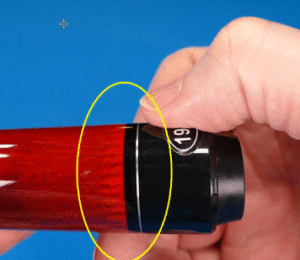
Our standard: apply just enough glue to secure the joint without overflow, preventing any surface contamination before staining even begins.
Conclusion:
A high-quality stained cue is the result of careful wood selection, expert color mixing, disciplined process control, and attention to detail. At OuJiong, we rely on consistent craftsmanship to ensure every maple cue delivers a natural, translucent, and premium finish.
If you’re interested in cue staining techniques, custom colors, or OEM collaboration, feel free to reach out to us.