
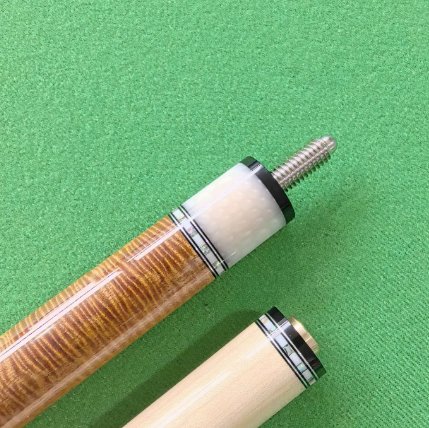
When shopping for a new pool cue, players often face a fundamental choice beyond weight and tip size: the finish. Broadly speaking, cues come in two varieties—**painted cues** and **natural (unfinished) cues**. While aesthetics are a personal preference, the type of finish significantly impacts the cost, material quality, and most importantly, the feel in your hands.
### The Illusion of Paint: Hiding Imperfections
As the names suggest, one type is coated with paint, while the other showcases the raw wood. Painted cues can vary widely; some have a simple base coat, while others feature a thick, high-gloss topcoat. A common example is the budget-friendly factory cue with a black butt. Many players assume this is ebony or rosewood, but once that paint is stripped away, it often reveals common maple or inferior wood with dark stains.
Paint serves a purpose beyond color—it hides flaws. Cracks, wormholes, and uneven grain can all be concealed under a layer of lacquer. Because of this, manufacturers don’t need to be selective about their wood blanks, making painted cues cheaper to produce.
### The Craft of Natural Wood
In contrast, crafting an unfinished or natural cue demands perfection. Without paint to hide behind, manufacturers must hand-select only the finest wood blocks, ensuring a flawless grain pattern free of blemishes. This rigorous selection process results in a high rejection rate and significant material waste, which directly contributes to the higher price tag of natural finish cues.
### Manufacturing: Machine-Made vs. Hand-Sanded
The production lines for painted cues—especially mass-produced models—are highly efficient. Since the paint covers everything, the wood doesn’t require meticulous preparation. They can move quickly from assembly to painting.
Natural cues, however, rely heavily on **meticulous hand-sanding**. During the final finishing stages, craftsmen spend hours ensuring the surface is perfectly smooth and visually stunning. This labor-intensive craftsmanship is another reason why natural cues command a premium price.
### Performance and Feel: Why It Matters
Beyond looks and cost, the biggest difference lies in the **grip and feel**.
* **Painted Cues:** Over time, painted surfaces can become sticky. As you stroke, you might hear a squeaking noise due to friction. Moreover, sweat and oils from your hands can break down the paint, ruining the texture and requiring a glove.
* **Natural Cues:** These are typically treated with oils or high-quality conditioners. They offer a dry, natural grip that improves over time. For players who struggle with sweaty palms or prefer a traditional connection to the wood, an unfinished cue is almost always the superior choice.
**Conclusion:**
If you prioritize durability and budget, a painted cue is a solid workhorse. But if you value craftsmanship, material integrity, and a superior tactile experience, investing in a natural wood cue is the way to go.