
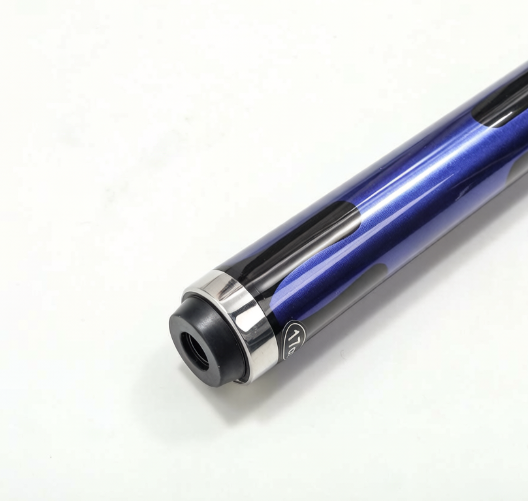
Why do most professional billiard players choose American cues instead of Snooker cue? First, let’s understand the differences between the two.
Snooker cues have a thinner shaft tip, offering better precision, a clear aiming point, and a shaft typically made of North American ash wood, which provides a faster response. The price of small-headed cues is more beginner-friendly — an entry-level model can cost around 80-90 US dollars. Most billiard halls also primarily use Snooker cues. However, they place higher demands on the stability of the backhand stroke. If the backhand is unsteady, miscues and deflection often occur.
American cues, on the other hand, usually feature a hard maple shaft, which offers excellent elasticity. The cue ball retains higher speed after impact, which is why many championship players prefer them.
How can you quickly figure out whether a American cue or Snooker cue is right for you? A simple test can help: place a ball half-frozen to the rail and try to pocket it using a soft push stroke with both types of cues. If you can pot it comfortably with both, choose the Snooker cue. If the American cue feels easier and the Snooker cue doesn’t work as well, go with the American cue.