
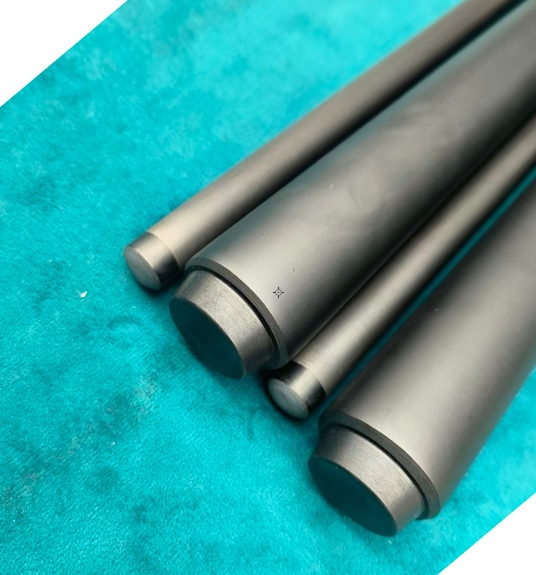
Carbon fiber and high-tech glass fiber cues can look very similar at first glance, making them hard to tell apart. For most beginner, these simple “tricks” are more than enough to identify a carbon fiber cue.
1、Check the Weave
- Carbon Fiber Cue:The surface is jet-black, glossy, and fine-grained, with a clear diagonal woven pattern. You might also see what looks like multiple layers of fibers stacked at the edges.
- Glass Fiber Cue:The texture is relatively blurry, the color may appear more white or light gray, and there can be a slightly grainy feel or a different luster. The edges often show a layered, plate-like structure. Pro-Tip: You can refer to our Obright Blilliard cue Supplier :3K W Symboles All Carbon Fiber Cue as a typical example of a carbon fiber cue’s appearance. 3K W Symboles All Carbon FIber Cue – Chongqing Obright Company
2、Tap and Listen
- Carbon Fiber Cue:When you gently tap it or play a shot on the table, it produces a crisp, loud, metallic “ping” with a clear, ringing resonance.
- Glass Fiber Cue:The sound is softer and deeper, lacking the sharp, ringing quality of carbon fiber.
3、Weigh It
- Carbon Fiber Cue:Generally For cues of the same length, a carbon fiber one will be noticeably lighter. A standard-length carbon cue often weighs around 300–400 grams.
- Glass Fiber Cue:Typically heavier, giving it a more substantial, “planted” feel in the hand. A standard-length glass fiber cue often weighs around 400–500 grams.