
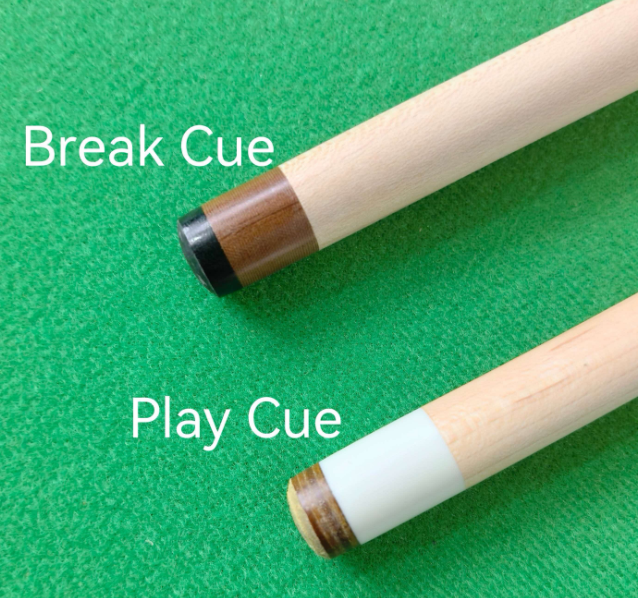
If you are a seasoned billiard player, you are well-versed in cue categorization: Break Cues, Playing Cues, and Jump/Break Cues. In American Pool, Break Cues and Playing Cues often look nearly identical—sharing similar lengths, weights, and even materials. However, for newcomers, don’t let the similar appearance fool you. These are two fundamentally different tools designed for specific tasks.
Today, we break down the core differences between Break Cues and Playing Cues to help you choose the right gear and elevate your game.
1. Material & Craftsmanship: Hardness vs. Elasticity
- Break Cue: Engineered for maximum hardness and power transfer. Break cues typically feature a Phenolic or Crystal tip, which is extremely rigid. Paired with a robust ferrule designed to prevent explosion upon impact, this setup ensures that 100% of the force is transferred to the cue ball without energy loss.
- Playing Cue: Designed for grip and control. Playing cues utilize multi-layer leather tips that offer a degree of softness and friction. This texture allows the tip to “grab” the cue ball effectively, enabling players to apply English (spin) and execute precise position play.
2. On-Table Application: Power vs. Finesse
- Break Cue: This is your “Big Gun” for the opening shot. Its sole purpose is to deliver a massive burst of power to spread the rack. The hit produces a sharp, crisp sound and sends the balls flying across the table. Once the break is done, the break cue is set aside.
- Playing Cue: This is your “Precision Tool” for the rest of the game. It handles every shot with delicacy and consistency. Using a break cue for regular shots feels clunky, offers poor control, and can potentially damage the rail cushions due to the excessive impact.
In Short,the Break Cue represents Power, while the Playing Cue represents Finesse. Using the right tool for the job is not just a pro standard—it’s the smartest way to protect your table and extend the lifespan of your equipment.