
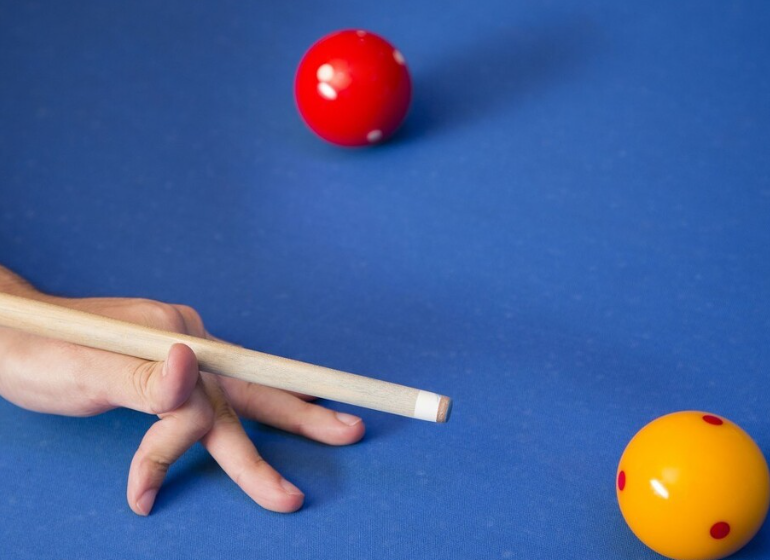
At Obright Cue Stick Manufacturer China, we’ve worked with players, clubs, and brands around the world to refine what truly makes a difference at the table. One of the fastest ways to improve your game is mastering your hand bridge. Below are 9 practical bridge techniques, each tailored for specific on-table scenarios—so you can play with more control, confidence, and consistency.
1. Standard Bridge– Offers excellent sightlines and rock-solid stability. Adjust your bridge height to fine-tune cue ball contact. As the foundation of all cue handling, it covers approximately 80% of routine shots.
2. Rail Bridge – Deploy this when the cue ball lies within 10 cm of the cushion. While the raised support can challenge stability, staying low and close to the rail—while maintaining cue clearance—keeps your stroke consistent.
3. Close-to-Rail Bridge – Engineered for ultra-tight cushion situations. This bridge ensures clean contact when virtually no space exists between the cue ball and the rail.
4. Phoenix-Eye Bridge (Loop Bridge) – Crafted for precision and cue alignment. Ideal for large-tip cues, power breaks, and heavy-spin shots, it’s the preferred choice for high-demand scenarios.
5. Rail Phoenix-Eye Bridge– A hybrid design combining the elevation of a rail bridge with the control of a phoenix-eye. Delivers added stability for challenging shots along the cushion.
6. Rear Snooker Bridge– Perfect when obstacles sit behind the cue ball. This bridge allows flexible adjustments to your attack angle, letting you navigate around obstructions with ease.
7. Flying / Elevated Bridge – Your go-to technique for jump shots, massé shots, and full-moon curves. Maximizes cue freedom for advanced shot-making.
8. Pocket Bridge – Used when the cue ball rests near a pocket. Enables delicate control over both speed and direction, essential for precise positional play.
9. Ring Bridge – Formed by locking your index finger around the first knuckle of your middle finger to create a secure ring. Paired with 20–25 N of grip pressure on the break, this bridge can boost cue acceleration by up to 15%, making it a powerful asset for high-impact shots.